
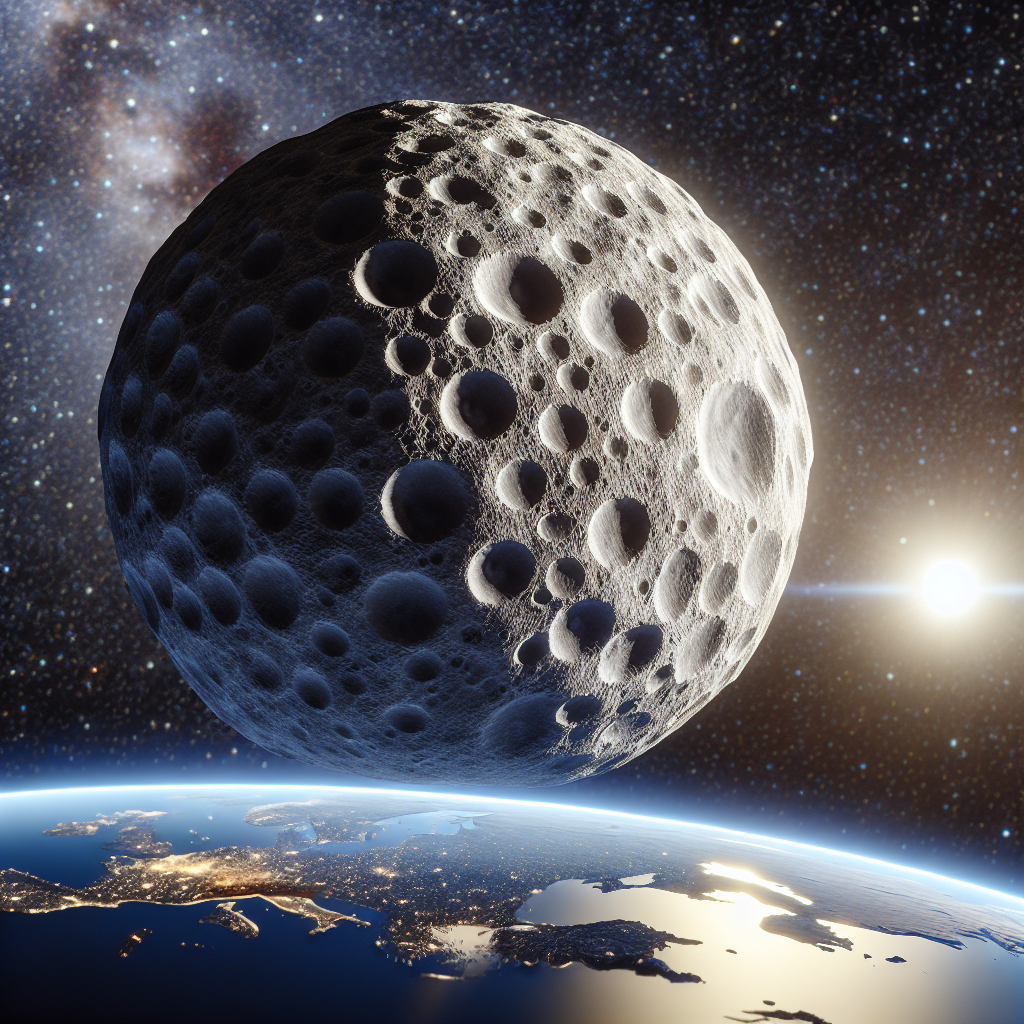
So, have you ever wondered if our Earth feels a bit lonely, floating through space with just one moon? Well, it turns out, there’s a new celestial buddy in town, and it’s quite an intriguing discovery. Astronomers have recently identified what’s known as a “quasi-lunar moon” orbiting our planet. Let’s dive into what this means and why it’s an exciting find for us earthlings.
What Exactly is a Quasi-Lunar Moon?
First off, the term “quasi-lunar moon,” also known as a “mini-moon,” might sound like something out of a sci-fi novel, but it’s very real. These are essentially small asteroids that get caught in Earth’s gravitational pull. Unlike our main moon, these mini-moons don’t stick around forever. They orbit us for a short period before heading off into space again.
Think of them as temporary visitors or tourists who come to explore the gravitational vicinity of Earth and then leave to wander the cosmos once more.
Discovery of Earth’s Latest Mini-Moon
The discovery of these celestial objects is quite rare. The latest mini-moon was spotted by a team of astronomers who were actually monitoring near-Earth objects to ensure none of them were a threat to our planet. It’s like finding a needle in a haystack, but instead of a needle, it’s a rock that’s several meters in diameter, and instead of a haystack, it’s the vast expanse of space.
This new mini-moon is fascinating because it gives scientists a unique opportunity to study an asteroid up close without having to travel to it. Observations can help scientists learn more about the composition of these asteroids, their origins, and their behavior as they interact with Earth’s gravity.
Why Should We Care About Mini-Moons?
You might be wondering, “Okay, but why does this matter to me?” Here’s the scoop:
- Scientific Insight: Mini-moons are like free samples of asteroids. Studying them can provide valuable insights into the materials that make up our solar system, which is like looking back in time at the building blocks of Earth.
- Planetary Defense: Understanding these small visitors’ trajectories can enhance our strategies for planetary defense. Knowing how they orbit and eventually leave Earth could be crucial if a more dangerous object approaches.
- Space Missions: Future missions could potentially visit these mini-moons. This provides a more feasible target for testing technologies or even as stepping stones for deeper space exploration.
What’s Next?
Astronomers continue to watch our new mini-moon and will collect data until it bids farewell. Each observation adds a piece to the vast puzzle of our universe. For us enthusiasts, it’s another reminder of the dynamic and ever-changing space environment that surrounds our planet.
So next time you look up at the night sky, just think about the fact that for a brief period, Earth doesn’t have just one moon but has companions coming and going, each with its own story. It’s a small reminder of the wonders and mysteries that await us out there in the vast expanse of space.
Original article: Read More Here
About The Author


